Outpatient care in Minnesota
Outpatient care in Minnesota

You count up pills against the days until your next refill. Some mornings begin with a drink to calm your hands before work. You might be the partner who recognized the pattern years before anyone said anything. It is difficult to say any of this aloud. Pushing it off can feel easier. At Blue River Behavioral Health, our addiction treatment in Minnesota starts with why you’re here. Our programs are outpatient, which means you sleep in your own bed every night. You’ll have regular hours with a therapist and group, as well as a plan for your time alone. Building that alone time starts with the substance you have been using.
SAMHSA’s 2025 National Survey on Drug Use and Health found a past-year substance use disorder in close to 45 million people. That covers U.S. residents ages 12 and up, or roughly 15 in every 100. Behind that number are very different substances, and each one requires a different approach to care. That is why your drug and alcohol treatment with us accounts for how often you use and for how long.
Alcohol addiction shows up as drinking that has become routine or hidden. Stopping after heavy, long-term drinking can be medically serious, so we review your drinking history before planning care.
Learn moreBenzodiazepines are sedatives prescribed for anxiety, panic, and sleep. Regular use can bring physical dependence, even as prescribed. Stopping suddenly can be dangerous, so any dose change needs medical oversight.
Learn moreCocaine is a short-acting stimulant that floods the brain with dopamine, so the high is intense and brief. The comedown often drives repeated use in one night, then brings exhaustion and low mood.
Learn moreFentanyl is a synthetic opioid far stronger than heroin. Illegally made fentanyl is often mixed into other drugs and pressed pills, so exposure can happen without your knowledge, raising overdose risk.
Learn moreCall our admissions team. We will listen to what is going on and explain which level of care may fit.
(612) 614-0964Some withdrawal is too risky to manage at home, so detox is done under medical supervision. If you need a staffed setting around the clock, residential care is the next step. Blue River doesn’t offer either one, but our case manager will coordinate a referral to a trusted partner. When you finish that stage, you can move into our outpatient care, which builds on the progress you’ve already made.

Insurance and Coverage
Blue River accepts all insurance plans, including out-of-network benefits. Cost questions keep many adults from calling. We answer those first.
Share your plan details, and our admissions team contacts your insurer. Then we explain what your plan covers in plain language. Nothing you share commits you to anything.













No obligation. We never quote costs before your benefits are checked.
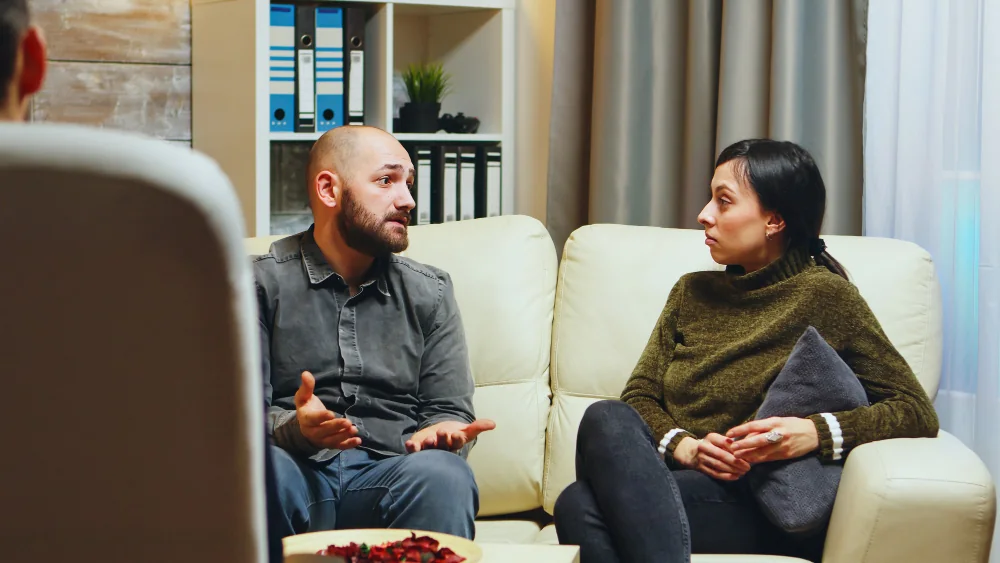
Our addiction treatment in Minnesota has four levels, organized by how many hours per week you will spend in treatment. If drugs or alcohol are taking up your entire day, our partial hospitalization program (PHP) gives you a structured place to be on weekdays. Clients in PHP spend five to six hours with us per day, Monday through Friday. Our psychiatric and medical team is nearby while you are here. Our intensive outpatient program (IOP) fits you if you are working or caring for family and cravings are still winning out. We meet three to five days a week for roughly three hours. We spend most of those hours identifying triggers and learning new ways to respond.
Once things feel more stable, our outpatient program (OP), which meets weekly or biweekly. Here you continue to practice the skills you learned. Virtual IOP and OP hold those meetings online. That can help if you want more privacy or live far from our office. You can move up a level if you hit a tough stretch, and step down as you gain more control. All levels of care include a 12-step component, crisis support between sessions, and a case manager for scheduling, insurance questions, and referrals.
Your individual and group sessions draw on three evidence-based therapies: cognitive behavioral therapy (CBT), dialectical behavior therapy (DBT), and motivational interviewing. In family therapy, the people closest to you join guided sessions and learn how to support you in healthy ways. We work in a trauma-informed way, so you choose what to talk about and when. Some of our team members bring their own recovery experience to this work.
Every client has a medication evaluation with our psychiatric provider. For opioid or alcohol use disorders, medication-assisted treatment (MAT) may include buprenorphine (Suboxone) or naltrexone if you and your provider decide it fits. NIDA’s research report on medications for opioid use disorder reviews evidence that these medications reduce opioid use. Nothing is prescribed automatically in our outpatient addiction treatment in Minnesota. Medication starts only after the evaluation, and your therapy sessions continue while you take it.


Substance use can show up alongside depression, anxiety, PTSD, bipolar disorder, or ADHD. Clinicians call this a dual diagnosis, or co-occurring disorders. We treat both in one plan, and your therapist and psychiatric provider set goals for each condition together. If medication helps with mood, anxiety, or focus, our psychiatric provider checks in regularly and adjusts it as needed. Tell us early if something besides substance use is weighing on you. Your assessments cover both, and what you share shapes the plan.
Start by telling Blue River Behavioral Health what you are using and roughly how much. It also helps us to hear how the last few weeks have gone. If you are in detox or a residential program, your care team can make that call for you. Next, we ask what your days need. Some people need medical support first. Others need a full day of structure, or only a few hours a week.
From there, our clinical team recommends where your addiction treatment in Minnesota should begin and tells you why. You decide whether to start, and when. Questions are welcome at any point, by message or phone.
Confidential. No obligation.
Starting substance use treatment in Minnesota brings up questions about state rules, privacy, setbacks, and the medications you already take.
(612) 614-0964No, Minnesota replaced the Rule 25 assessment with direct access, effective July 1, 2022. Under direct access, you can go straight to a provider for substance use treatment in Minnesota. That provider completes an assessment with you to help decide your level of care. If a county worker or an older Rule 25 is part of your history, mention it when you contact us.
Yes. Federal privacy rules give substance use treatment records extra protection over standard health privacy. In most cases, we need your written consent before sharing anything, including with family or an employer. At Blue River, we review who can access your information during admission, and you can change that later.
It means using two or more substances, either together or at different times. Examples include alcohol with a benzodiazepine, or a stimulant alongside an opioid. Combining benzodiazepines and opioids raises overdose risk, so tell us about everything you take. At Blue River, we treat combined substance use within a single plan.
We plan for setbacks, and your therapist adjusts your plan around what happened. For a while, you might move from OP to IOP at three to five days a week. At Blue River, safety planning is part of care, so you know what to do if a setback turns urgent.
Not automatically. During your evaluation, our psychiatric provider reviews everything you take, including prescriptions from other doctors. If a medication needs to be reduced, your provider plans that change with you step by step. At our facility, follow-up visits let your provider adjust your medications as your needs change.