Outpatient care in Minnesota
Outpatient care in Minnesota

Living with a substance use problem and a mental health condition at the same time wears you down. You may have finished treatment for one, only to find the other waiting for you at home. Each new provider asks for your history again, and nothing seems to connect. If you are here for a partner, parent, or adult child, you have watched this cycle up close. At Blue River Behavioral Health, our outpatient dual diagnosis treatment in Minnesota brings both conditions into one plan. We welcome you and your family if you want them involved, without judgment. You will get straight answers about where to start, even if you are unsure what you need.
You have two problems that feed each other. One is a substance use disorder. The other is a mental health condition. Say you take opioids for a few hours of relief from depression. The next morning, the low is heavier, so you take them again. Treat only the opioids, and the depression is still there, waiting for the next dose. At Blue River, we treat both from the start.
Either one can come first. Some people drink or use to quiet symptoms they already had. For others, heavy use comes first and wears down sleep and mood until a mental health condition sets in. NIDA’s research report on common comorbidities with substance use disorders adds that the two also share risk factors, including genetics, stress, and trauma. Once both are present, each feeds the other.
Trauma often sits under both. Our care at Blue River is trauma-informed, so you decide how much of your history to share and when. Your plan covers both conditions, no matter which came first.


Drugs and alcohol change your mood while you're using them. They can also change your mood as your body metabolizes and removes them from your system. Withdrawal is marked by a pounding heart, agitation, and sleepless nights, which can mimic anxiety. Dysphoria after a binge can feel eerily similar to depression. Clinically, we call these symptoms substance-induced. These symptoms are valid and worth treating, and many will subside as your body recalibrates. If you have an independent anxiety or depression disorder, it will usually continue once you stop using.
We start with one question when we evaluate you: Were the symptoms present before use? Our psychiatric provider will review your history with you. Panic during week one of being benzo-free can often masquerade as an anxiety disorder. It can also dissipate within a few weeks. So we wait and reassess. If that lingering low mood or anxiety is still present, we treat that too.
Insurance and Coverage
Blue River accepts all insurance plans, including out-of-network benefits. Cost questions keep many adults from calling. We answer those first.
Share your plan details, and our admissions team contacts your insurer. Then we explain what your plan covers in plain language. Nothing you share commits you to anything.













No obligation. We never quote costs before your benefits are checked.
Split care also carries a quieter risk. A prescriber choosing a sleep aid or an anxiety medication may not know how much you drink. A counselor working on your drinking may not know your antidepressant dose just changed. Each provider makes a reasonable call with only part of the picture.
Data from the 2023 National Survey on Drug Use and Health puts the overlap at 35%, measured as the share of U.S. adults with a mental health condition who also had a substance use disorder. Since the pairing is so common, our first assessment asks about both, even if you called about only one. With dual diagnosis treatment in Minnesota, one team holds your full history. One plan carries goals for both conditions. Co-occurring disorders treatment in one place means one intake, one set of instructions, and a team already aware of what changed last week.
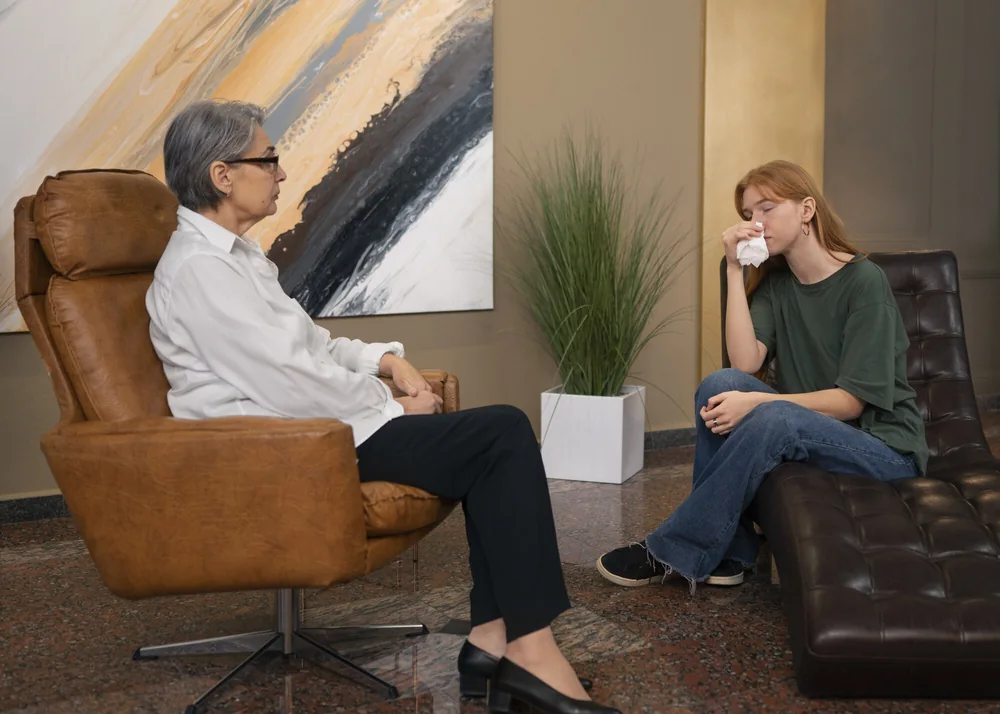

The first few sessions are mostly us listening. We start with two assessments: a needs assessment and a biopsychosocial assessment (BPS). Together, they take in your history, what you are good at, what is hard right now, and who is in your corner. You will get questions about your sleep and stress. We will also ask what you use, how often, and what treatment you have tried before. All of it goes into your co-occurring disorders treatment plan.
Your therapist turns what you share into an individualized plan, written with you, with goals for each concern. Our psychiatric provider sorts out the diagnosis and handles ongoing medication management. For opioid or alcohol use disorders, this can include medication-assisted treatment (MAT) when it is clinically appropriate. Nothing gets prescribed by default.
During session, CBT (cognitive behavioral therapy) helps you identify the thoughts that trigger cravings or negative mood. DBT (dialectical behavior therapy) equips you with skills to use when things get emotional. Motivational interviewing keeps you talking about your reasons for change. By addressing cravings and mood concurrently in session, neither gets pushed aside.
Case management addresses aspects outside of session, such as aftercare planning and crisis support. If you need detox, residential care, or sober living before treatment, we will refer you to one of our partner programs. With your permission, family therapy and education give the people in your support system a way to help you. They learn how each condition affects you and what to do when one is triggered.
If cravings and mood symptoms are both pulling hard every day, PHP gives you the most support we offer. You spend about five to six hours in a group on weekdays, in person, with psychiatric and medical access close by. Our dual diagnosis IOP, or intensive outpatient program, asks for three to five days a week, around three hours each time. Individual therapy and relapse prevention are part of every week. Dual diagnosis IOP suits you when most days are manageable, but cravings or mood still need attention several times a week.
Our outpatient program, or OP, slows the pace to individual and group sessions once a week or every other week. It usually fits once your symptoms have steadied and you are using your skills on your own between visits. Virtual IOP and virtual OP offer the same care online, which helps if privacy or distance gets in the way. As your needs change, you can move between levels without changing teams.

Maybe you plan to mention only the drinking, or only the low moods. Bring up the other part too, even if it feels smaller. You don't need a formal diagnosis before you call, and you don't need the right words. Contact us today or send a message, whichever feels easier. We'll explain how our dual diagnosis treatment in Minnesota could look for you. At Blue River Behavioral Health, we accept all insurance plans, and our team can help you understand what your benefits cover.
Confidential. No obligation.
Substance use and mental health rarely stay in separate lanes. These answers cover the questions people most often ask us about treating them together.
(612) 614-0964Yes, a co-occurring disorders can involve more than two conditions. You might live with anxiety and depression while also drinking heavily, for example. At Blue River, your plan can hold a goal for each condition your assessment finds. Your psychiatric provider also checks how your medications work together across all of them.
Your team looks at what led up to it and adjusts your plan with you. Relapse prevention is already part of IOP, so you work through a return to use in sessions. If you need more structure for a while, we can move you up a level with the same team. Crisis support and your safety plan cover the harder moments between sessions.
Contact us before your residential stay ends so that planning can start early. Our case manager coordinates with your residential team and our partner programs, and our admissions team can begin pre-certification during that window. Depending on your needs, you might start in PHP or IOP and move to a lighter level of care later.
We place you in the program designed for what the assessment finds. We run a substance use program and a mental health program, along with integrated dual diagnosis care. Your biopsychosocial assessment and psychiatric evaluation guide that choice. If a second condition comes up later, we add it to your existing plan.
Yes, a substance use disorder doesn't automatically rule out ADHD medication. It does change how we choose. Stimulants can be misused, so we review your substance use history before recommending anything. Non-stimulant options exist. We walk you through each one so you can weigh your choices. Therapy can also work on focus and impulse control, so medication is not your only option.